

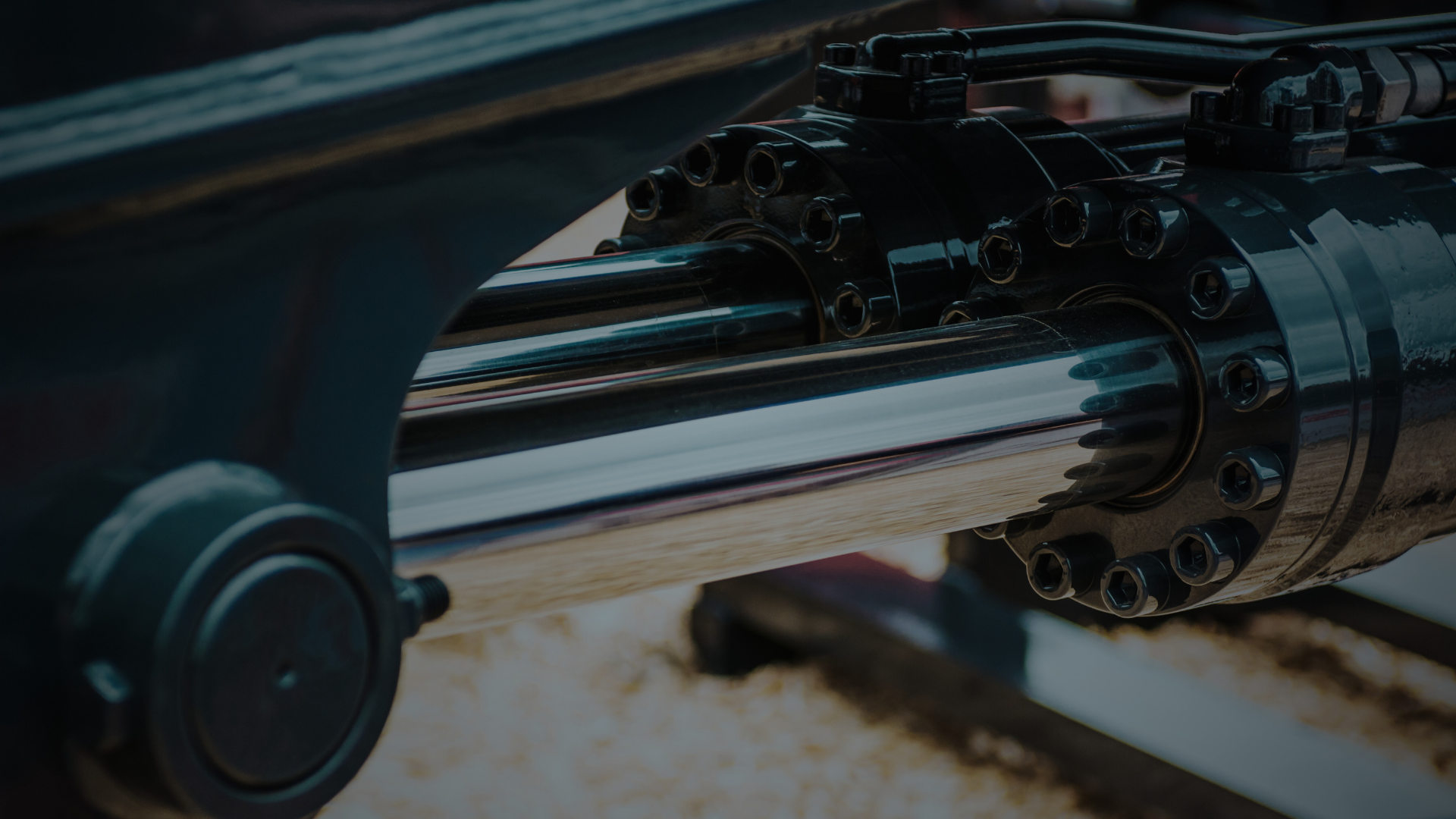
Sealing solutions for hydraulic equipment
Hydraulic seals are essential components used in hydraulic systems to prevent leaks, maintain pressure, and ensure the proper functioning of the hydraulic system. These seals are designed to function in equipment where the hydraulic fluid is used to generate mechanical power and motion.
We specialize in the machining of seals, which provides unmatched flexibility in terms of lead time, material selection, shape, geometry, dimensions, and tolerances. The seals can be quickly customized to your specific needs! There are various types of hydraulic sealing components, each designed for a specific function. Common types include scrapers, piston seals, rod seals, and O-rings, combined in a system with guide rings and support rings.
Scrapers
-
The function of a scraper is to prevent particles from entering a hydraulic or pneumatic cylinder or valve. This helps prevent contamination that could damage the seals and metal surfaces
Piston seals
-
The primary function of a piston seal is to create a seal between the piston and the cylinder bore, ensuring that the energy in the medium builds up pressure inside the cylinder and converts this into mechanical force through the cylinder rod
-
They are typically made of materials such as polyurethane or rubber and are available in a variety of designs
Rod seals
-
The main function of the rod seal is to prevent the medium from leaking out through the packing box when the cylinder is pressurized. To function properly, a thin lubricating film should pass under the seal and return to the cylinder when the rod is retracted
-
Depending on the application, one or two (sometimes more) rod seals are used to achieve maximum sealing effectiveness. The primary rod seal must be able to withstand the system pressure
Guide rings
-
The function of guide rings is to prevent contact between the surfaces of moving parts. To achieve proper positioning, the guide rings must be able to withstand radial loads acting on the piston and rod
-
Guide rings made of fabric-reinforced resin and various thermoplastics have largely replaced the use of metal guides. This has resulted in a significantly longer service life for hydraulic cylinders
O-rings/backup-rings
-
O-rings are among the most common types of hydraulic seals. The O-ring has a simple geometry and is usually (but not always) made of rubber or thermoplastic elastomers
-
Given the design constraints—such as sealing performance, pressure resistance, and dynamic sealing function—there are many solutions available for a standard O-ring groove
-
O-rings are often used as static sealing elements in hydraulic systems. However, they tend to extrude into the radial gap between steel components even at low pressure and become damaged
-
One possible solution is to combine O-rings with backup-rings. However, there are many solutions available for a single O-ring groove, and different solutions can affect many aspects of the application and its functionality